Grade 3: Sorting Out Punctuation
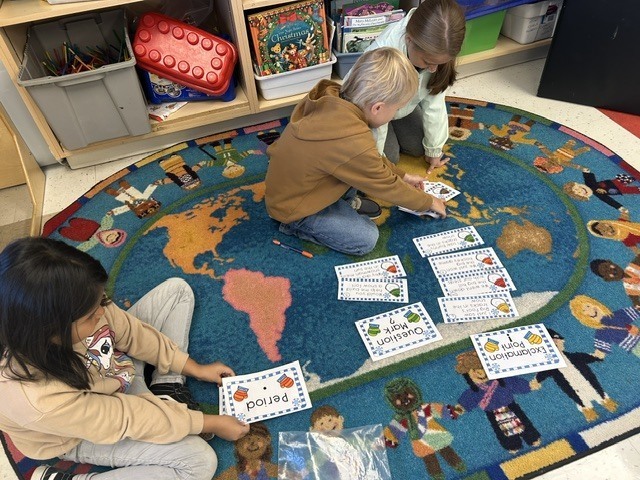
Mrs. Harris's Grade 3 class has been busy getting to know the small marks that do a big job: periods, question marks, exclamation marks and commas. Instead of filling in blanks on a worksheet, students worked in groups to sort sentences by their punctuation. They read each one aloud, argued a little, and decided whether it was telling, asking or exclaiming.
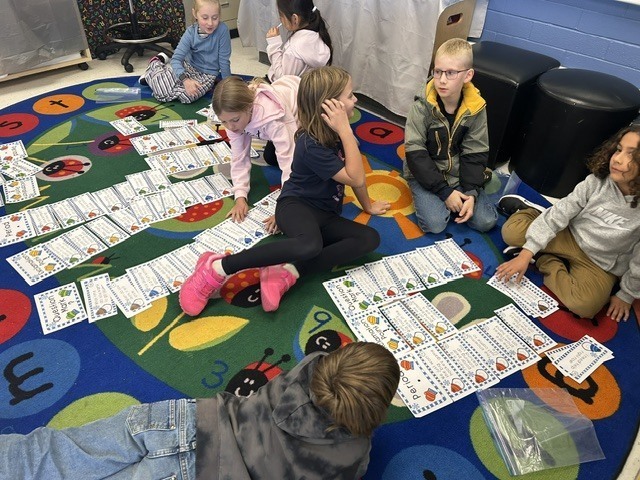
This work connects directly to the Conventions strand of Alberta's English Language Arts and Literature curriculum, where Grade 3 students learn to use punctuation to make meaning clear for a reader. It also builds their reading fluency, because knowing a question mark is coming changes how you read the sentence. Punctuation is the difference between "Let's eat, Grandma!" and "Let's eat Grandma!", and our Grade 3s are now well equipped to keep Grandma safe.
Grades 1–2: Apple Day
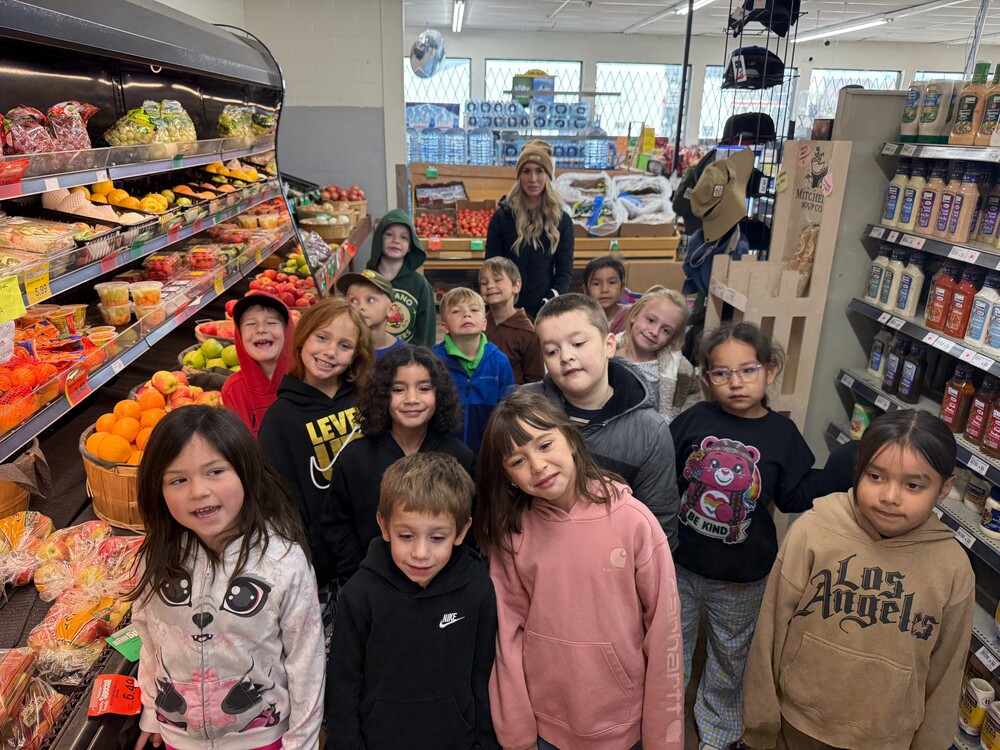
Mrs. Miller's Grade 1/2 class spent a crisp fall day learning math with apples. The class walked over to Bassano Foods, who were, as always, welcoming and generous hosts. Students picked out a variety of apples, then got to work measuring them, sorting them by colour, size and type, and graphing what they found.
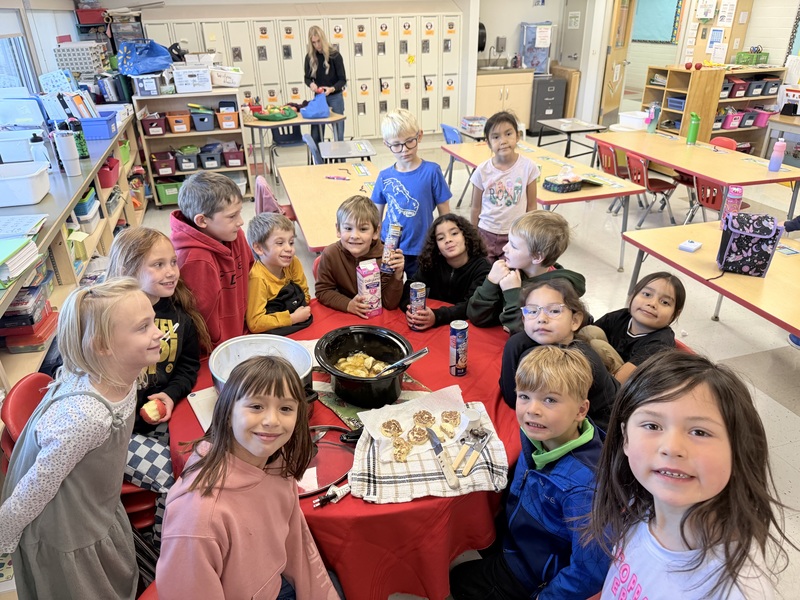
Back at school, the class worked together on [activities — e.g., counting seeds, estimating, comparing which apple was heaviest, and of course, taste testing].
Apple Day touched on several parts of Alberta's K–6 Mathematics curriculum: measuring and comparing length using non-standard units, sorting objects by their attributes, and collecting and organizing data into graphs that answer a question. Those are the building blocks for much bigger math later on, and it's hard to forget what a graph is when you made one out of apples you picked yourself.
Why Hands-On Matters
Both classes share something important: students are learning by doing. When young learners handle real objects, talk through their thinking with classmates, and make decisions as a group, the learning sticks in a way a worksheet rarely manages. They have to explain their reasoning, listen to someone who sees it differently, and come to an agreement. That's deeper thinking, and it builds the collaboration and communication skills students will use long after they've mastered commas and bar graphs.
It also keeps them engaged. A Grade 1 student measuring an apple isn't wondering when recess starts. Hands-on learning gives every student a way in, whether they learn best by moving, talking, building or seeing, and it turns a lesson into an experience they'll remember.
Thanks to Mrs. Harris and Mrs. Miller for creating classrooms where learning is active, social and a lot of fun, and to Bassano Foods for being such great supporters of our students.